

In this guide 98 sections
- Private Limited Company Registration — Quick Overview
- What Is a Private Limited Company?
- Who Should Consider a Private Limited Company?
- When May an LLP or Proprietorship Be More Suitable?
- Minimum Requirements for Private Limited Company Registration
- Authorised Capital vs Paid-Up Capital
- Digital Signature Certificate — DSC
- Director Identification Number — DIN
- Private Limited Company Registration Process in 2026
- Step 1: Decide the Founder and Ownership Structure
- Step 2: Obtain DSCs
- Step 3: Select the Proposed Company Name
- Step 4: File SPICe+ Part A — Name Reservation
- Step 5: Prepare the Memorandum of Association — MOA
- Step 6: Prepare the Articles of Association — AOA
- Step 7: Complete SPICe+ Part B
- Step 8: File e-MOA and e-AOA
- Step 9: File AGILE-PRO-S
- Step 10: File INC-9 Declaration
- Step 11: Professional Certification and Submission
- Step 12: Payment of MCA Fees and Stamp Duty
- Step 13: ROC / CRC Review
- Step 14: Certificate of Incorporation
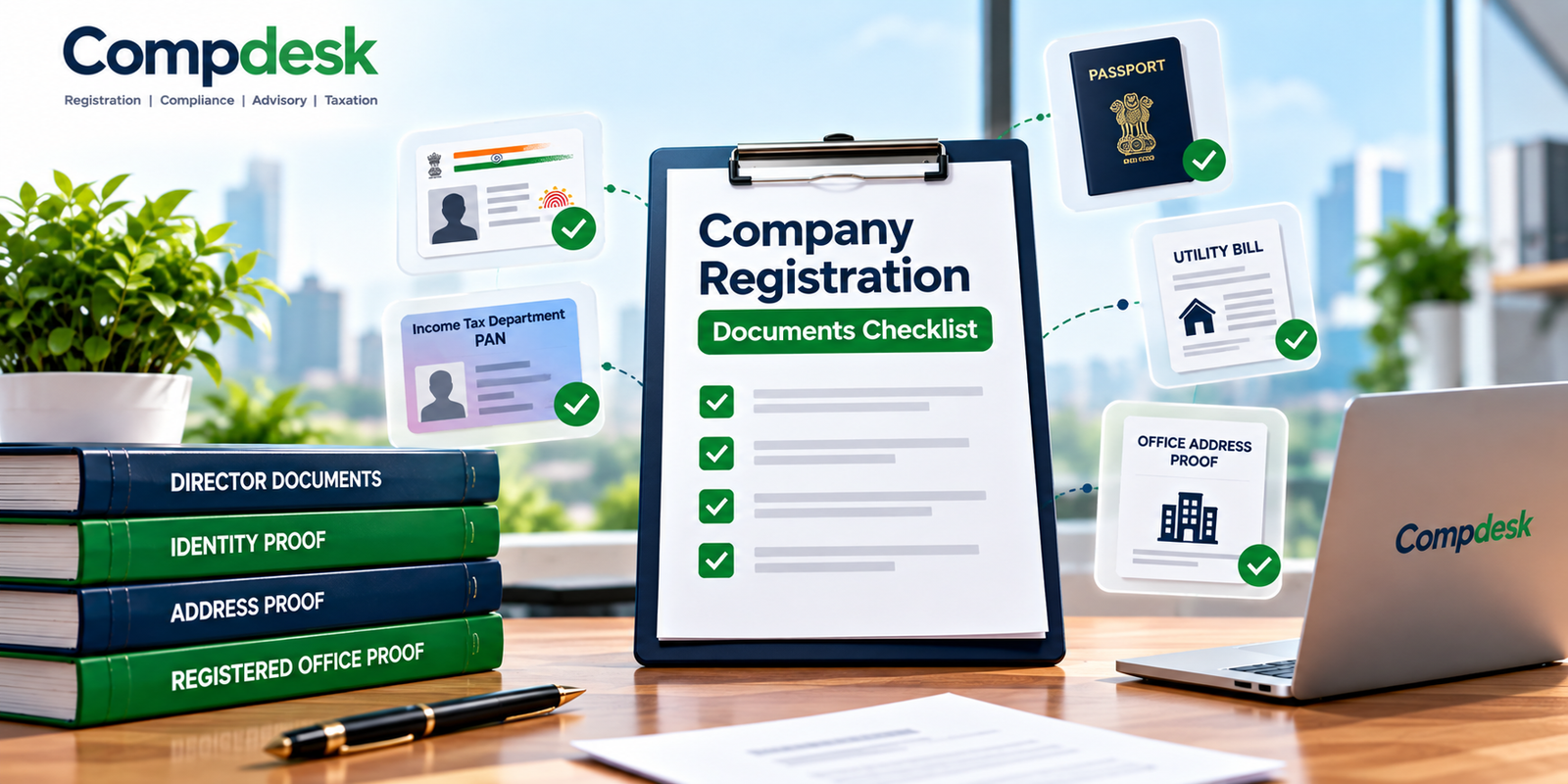
- Documents Required for Private Limited Company Registration
- Documents for Indian Directors / Subscribers
- Registered Office Documents
- Additional Documents for a Corporate Subscriber
- Foreign Director or Foreign Subscriber Documents
- Can an NRI or Foreign National Become a Director?
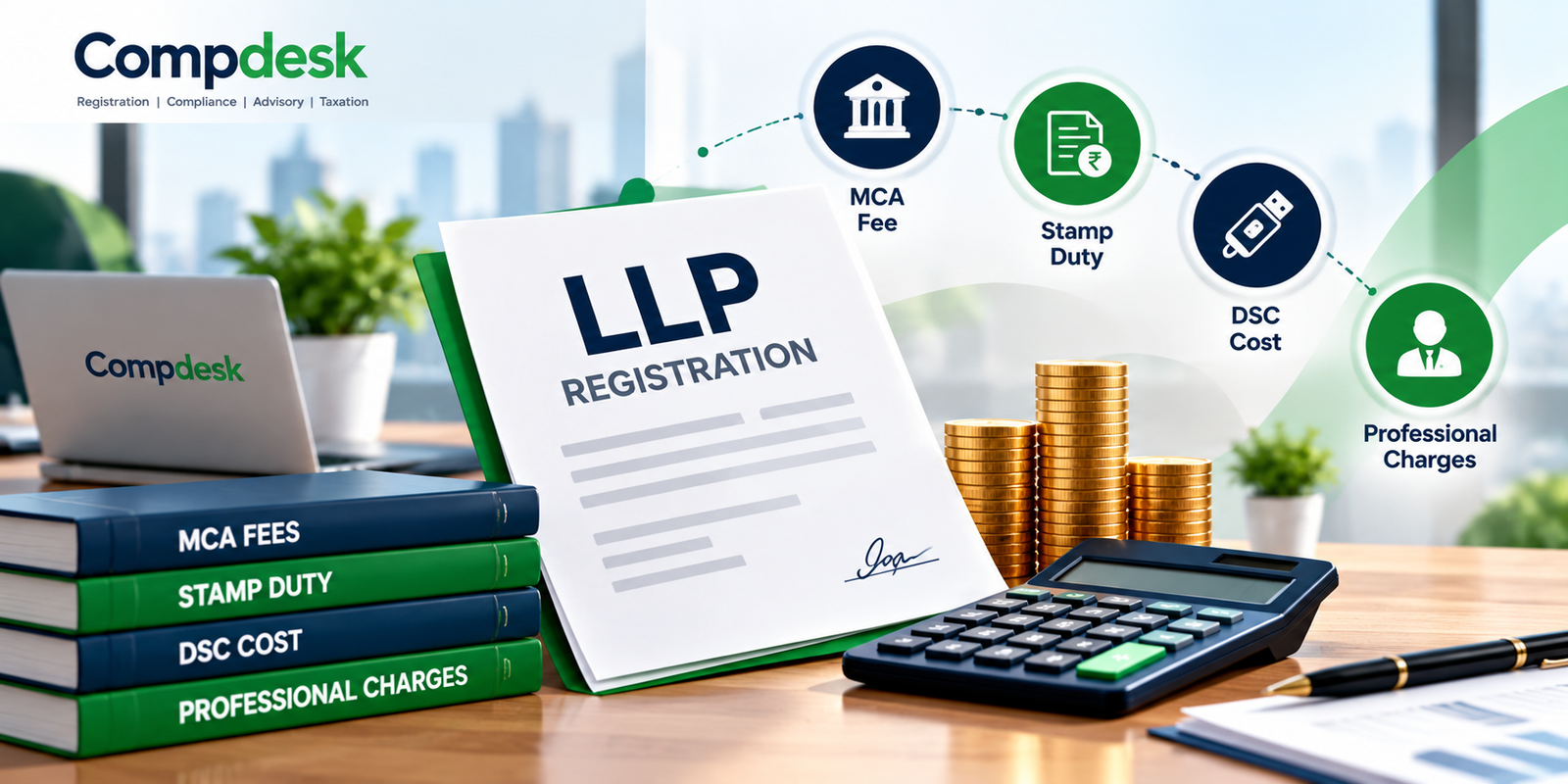
- Private Limited Company Registration Fees in 2026
- MCA Incorporation Filing Fee
- Name Reservation
- PAN and TAN Charges
- Stamp Duty
- DSC Cost
- Professional Fee
- Indicative Cost Structure
- How Long Does Private Limited Company Registration Take?
- Important Compliance Immediately After Incorporation
- 1. Open and Activate the Company Bank Account
- 2. Subscribers Must Pay Share Subscription Money
- 3. File INC-20A — Declaration of Commencement of Business
- 4. Hold the First Board Meeting
- 5. Appoint the First Auditor
- 6. Issue Share Certificates
- 7. Maintain Statutory Registers and Minutes
- 8. Display Company Name and Registered Office Details
- 9. Set Up Accounting From Day One
- Annual Compliance After Private Limited Company Registration
- Private Limited Company vs LLP — Quick Decision
- Common Private Limited Company Registration Mistakes
- Practical Example — Two-Founder Startup
- Private Limited Company Registration Checklist
- Frequently Asked Questions
- Need Help Registering a Private Limited Company?
Last Reviewed 07 November 2026
Process, documents, fees, timeline and compliance
A Private Limited Company is one of the most widely used business structures in India for startups, technology businesses, professional ventures, family-owned enterprises and companies that may raise outside equity in the future.
The incorporation process is now largely integrated through the Ministry of Corporate Affairs' MCA V3 portal using SPICe+ and its linked forms. Through the same incorporation workflow, a new company can obtain or apply for several connected registrations, including the Certificate of Incorporation, Corporate Identification Number (CIN), PAN, TAN, DIN for eligible proposed directors, EPFO/ESIC registration and a bank-account application.
But incorporation is not simply "getting a company certificate".
Before filing, founders need to decide:
- who will own the company;
- who will be directors;
- the proposed shareholding;
- authorised and subscribed capital;
- registered office;
- company name;
- business objects;
- whether any sectoral approval is required; and
- whether the company structure is appropriate for the business.
This guide explains the Private Limited Company registration process in India as applicable in 2026, including eligibility, documents, Government fees, SPICe+ filing, timeline and important post-incorporation compliances.
Private Limited Company Registration — Quick Overview
| Particular | Current position |
|---|---|
| Governing law | Companies Act, 2013 |
| Registration authority | Ministry of Corporate Affairs / Registrar of Companies |
| Main incorporation form | SPICe+ (INC-32) |
| Minimum members | 2 |
| Minimum directors | 2 |
| Resident-director requirement | At least one director must satisfy the Section 149(3) residence requirement |
| Minimum paid-up capital | No statutory minimum for a normal private company |
| Maximum members | Generally 200, subject to statutory exclusions |
| DIN through incorporation | Up to 3 proposed directors can apply through SPICe+ for a normal company |
| PAN and TAN | Integrated with SPICe+ |
| Bank-account application | Integrated through AGILE-PRO-S |
| EPFO / ESIC registration | Integrated for new companies, subject to applicable scheme conditions |
| GST registration | Optional through AGILE-PRO-S, where required/selected |
| Government incorporation filing fee | Depends on authorised capital; zero filing-fee concession applies up to ₹15 lakh authorised capital, subject to applicable rules |
| Stamp duty | State-specific |
| Name reservation fee | ₹1,000 where SPICe+ Part A is filed separately for name reservation |
| INC-20A | Generally within 180 days for a company having share capital |
Important: "Zero filing fee" does not mean company registration is completely free. State stamp duty, PAN/TAN charges, DSC cost and professional fees can still apply.
What Is a Private Limited Company?
A Private Limited Company is a company incorporated under the Companies Act, 2013 whose Articles of Association contain the statutory characteristics of a private company.
Among other things, a private company's Articles:
- restrict the right to transfer its shares;
- limit the number of members to 200, subject to statutory exclusions; and
- prohibit invitation to the public to subscribe for its securities.
Once incorporated, the company becomes a separate legal person.
It can:
- own property;
- open bank accounts;
- enter contracts;
- employ people;
- borrow money;
- raise equity within the applicable legal framework;
- sue and be sued; and
- continue despite changes in shareholders or directors.
The company's legal identity is separate from the personal identity of its shareholders.
Who Should Consider a Private Limited Company?
A Private Limited Company is particularly useful where the business expects:
- multiple founders;
- external investors;
- angel, VC or private-equity funding;
- employee stock options;
- formal ownership through shares;
- institutional customers;
- succession through transfer of shares;
- acquisition or strategic exit; or
- significant scale.
It is often the preferred legal form for venture-funded startups because ownership can be represented through shares and the Companies Act provides frameworks for equity, preference shares, private placements and employee stock options.
When May an LLP or Proprietorship Be More Suitable?
A company also brings recurring corporate-law obligations.
An LLP or proprietorship may be worth evaluating where:
- the business is closely owner-managed;
- external equity is unlikely;
- ESOPs are unnecessary;
- simplicity is a major priority; or
- the commercial activity does not require a company structure.
Entity selection should therefore be based on the expected three-to-five-year business plan rather than only the incorporation price.
For a detailed comparison, review the differences between LLP and Private Limited Company before registering.
Minimum Requirements for Private Limited Company Registration
A normal Private Limited Company requires the following core elements.
1. Minimum Two Members
Under Section 3 of the Companies Act, a private company can be formed by two or more persons subscribing to its Memorandum of Association.
The subscribers become the first members/shareholders of the company.
The same individuals can also be directors.
2. Minimum Two Directors
A private company must have at least two directors.
A company can appoint more directors depending on its governance requirements.
Under Section 149, the standard maximum is fifteen directors, although a company can appoint more than fifteen by passing the prescribed special resolution.
3. At Least One Resident Director
Every company must have at least one director who stays in India for a total period of at least 182 days during the financial year.
For a newly incorporated company, this requirement applies proportionately for the financial year in which it is incorporated.
This is a residence requirement rather than a citizenship requirement.
4. Registered Office in India
The company must have a registered office in India capable of receiving official communications and notices.
The office can potentially be:
- owned premises;
- rented premises;
- leased premises;
- premises used with the owner's consent; or
- a residential premises,
provided the company can establish its right to use the address and meet the applicable documentary requirements.
A commercial property is not mandatory merely because the entity is a company.
5. Company Name
The proposed name should comply with the Companies Act and Companies (Incorporation) Rules.
A typical private-company name ends with:
Private Limited
The proposed name should not be:
- identical or too similar to an existing company/LLP name;
- deceptively similar to a registered trademark;
- undesirable under the incorporation rules; or
- suggestive of regulated activities without the required approval.
6. Share Capital
There is no statutory minimum paid-up share capital for a normal private company.
The earlier ₹1 lakh minimum paid-up-capital requirement was removed by the Companies (Amendment) Act, 2015.
Founders should nevertheless choose an authorised and subscribed capital that makes commercial sense.
Authorised Capital vs Paid-Up Capital
These concepts are often confused.
Authorised Share Capital
This is the maximum share capital that the company is authorised to issue under its Memorandum at a particular time, unless the capital clause is later altered.
Subscribed Capital
This is the portion of capital that shareholders have agreed to subscribe.
Paid-Up Capital
This is the amount actually paid or credited as paid on shares issued by the company.
Example
Suppose a company is incorporated with:
- authorised capital: ₹10 lakh;
- subscribed capital: ₹1 lakh; and
- two founders subscribing ₹50,000 each.
The company is not required to collect the entire ₹10 lakh merely because that is the authorised capital.
However, the subscribers must pay the amount they agreed to subscribe, and commencement-of-business requirements should be observed.
Digital Signature Certificate — DSC
Company incorporation is electronic, so prescribed signatories require Digital Signature Certificates (DSCs).
DSCs may be required for:
- proposed directors;
- subscribers to the Memorandum and Articles; and
- the practising professional certifying the incorporation forms.
MCA requires signatories filing through the V3 system to register appropriately as Business Users and associate their DSCs with their MCA profiles.
DSC Is Not the Same as DIN
These are separate concepts.
DSC: electronic signing credential.
DIN: Director Identification Number allotted to an individual acting as a director.
Director Identification Number — DIN
A person proposed to become a director requires a DIN.
SPICe+ allows DIN applications for up to three proposed directors in the normal company-incorporation workflow.
If a proposed director already has a valid DIN, the existing DIN should be used.
A person should not obtain multiple DINs.
Private Limited Company Registration Process in 2026
The MCA incorporation process is completed primarily through the SPICe+ web service and linked forms.
Step 1: Decide the Founder and Ownership Structure
Before applying for a name, determine:
- names of shareholders;
- names of directors;
- shareholding percentages;
- initial capital;
- voting/control expectations; and
- whether any investor or foreign shareholder will participate.
This step is commercially more important than filling the MCA form.
Example
Two founders want equal ownership.
They may decide:
- Founder A — 50%;
- Founder B — 50%.
Before incorporating, however, they should also consider:
- who controls operational decisions;
- what happens in a deadlock;
- what happens if one founder leaves;
- whether future shares will be reserved for investors or employees; and
- whether a founders' agreement is required.
Equal shareholding without a decision framework can create governance problems later.
Step 2: Obtain DSCs
Obtain valid DSCs for the subscribers/directors who need to sign the incorporation documents.
Check that:
- names match PAN/passport;
- DSCs are valid;
- email/mobile details are correct; and
- the DSCs are properly associated with the relevant MCA Business User profiles.
Step 3: Select the Proposed Company Name
Prepare one or more strong name options.
The name should normally have:
- a distinctive element; and
- an element indicating the business or brand where appropriate.
Before filing, review:
- MCA existing names;
- LLP names;
- trademark conflicts;
- phonetic similarity;
- restricted words; and
- whether regulatory approval is needed.
Trademark Check Matters
MCA name approval does not automatically create trademark ownership.
A name may be available for incorporation yet still create brand or trademark risk.
Businesses intending to build a long-term brand should carry out a separate trademark search before finalising the company name.
Step 4: File SPICe+ Part A — Name Reservation
SPICe+ Part A deals with name reservation.
An applicant can either:
- submit Part A separately and reserve the name first; or
- file Part A and Part B together as part of the full incorporation application.
If Part A is filed separately, up to two proposed names can generally be submitted. One approved name is reserved.
If name and incorporation are filed together, only one proposed name is entered in Part A.
Name Reservation Validity
A separately approved company name is ordinarily reserved for 20 days from the date of approval.
MCA provides a paid extension mechanism allowing the reservation period to be extended, subject to the applicable fee and timing:
- 20 to 40 days;
- 40 to 60 days; or
- directly from 20 to 60 days.
Where founders are still collecting foreign documents, apostilles, office documents or regulatory approvals, the extension facility can be useful.
Name Reservation Fee
Where SPICe+ Part A is filed separately for name reservation, the MCA fee is ₹1,000.
Step 5: Prepare the Memorandum of Association — MOA
The Memorandum defines fundamental aspects of the company, including:
- company name;
- State of registered office;
- business objects;
- liability;
- authorised capital; and
- subscription by first members.
The objects clause should reflect the actual intended business.
Avoid both extremes:
- a very narrow object clause that restricts normal future activity; and
- a random list of unrelated businesses included without commercial reason.
Regulated activities may require specific approvals.
Step 6: Prepare the Articles of Association — AOA
The Articles contain the internal governance rules of the company.
They govern matters such as:
- share capital;
- issue and transfer of shares;
- Board proceedings;
- shareholder meetings;
- voting;
- dividends;
- directors' powers; and
- other internal procedures.
For simple founder-owned companies, standard Articles may be sufficient with appropriate modifications.
Where the company has multiple founders, investors or negotiated governance rights, the Articles should be reviewed carefully rather than treated as a routine filing attachment.
Step 7: Complete SPICe+ Part B
SPICe+ Part B contains the principal incorporation information.
It covers matters such as:
- company structure;
- registered office;
- authorised and subscribed capital;
- subscribers;
- directors;
- DIN application;
- PAN;
- TAN; and
- other incorporation details.
The form is supported by the linked incorporation forms and documents.
Step 8: File e-MOA and e-AOA
For qualifying incorporation cases, the electronic Memorandum and Articles are filed through the linked forms:
- INC-33 — e-MOA
- INC-34 — e-AOA
MCA provides specific exceptions where signed PDF MOA/AOA must instead be attached—for example, certain cases involving overseas subscribers or more than the permitted number of first subscribers.
Do not assume the electronic form is appropriate in every foreign-subscriber situation.
Step 9: File AGILE-PRO-S
AGILE-PRO-S (INC-35) integrates several linked registrations/services with company incorporation.
Depending on applicability and selection, the framework covers:
- GST registration;
- EPFO registration;
- ESIC registration;
- professional tax registration in supported States;
- bank-account opening application; and
- Shops and Establishment registration in the supported jurisdiction.
EPFO and ESIC
MCA's SPICe+ framework provides mandatory registration generation for new companies under EPFO and ESIC through the incorporation process, subject to the applicable system framework.
However, obtaining the registration number is not the same as saying contribution/payment obligations begin immediately.
Actual labour-law compliance obligations depend on the relevant statutory applicability and employee thresholds.
GST
GST registration through AGILE-PRO-S is not compulsory merely because a company is being incorporated.
GST registration liability should be determined separately under GST law based on:
- turnover;
- nature of supply;
- State;
- inter-State/e-commerce facts; and
- compulsory-registration provisions.
Bank Account
The incorporation workflow requires the new company to apply for opening its bank account through the linked process.
The bank still performs its own KYC and account-opening procedures.
Step 10: File INC-9 Declaration
INC-9 is the prescribed declaration by subscribers and first directors.
Under the integrated process, INC-9 is auto-generated electronically in standard cases where the prescribed conditions are satisfied.
Specific exceptions apply where the number/type of subscribers or directors falls outside the electronic-generation conditions.
Step 11: Professional Certification and Submission
SPICe+ incorporation requires certification by an eligible practising professional.
Depending on the form and engagement, this may involve a:
- Chartered Accountant;
- Company Secretary; or
- Cost Accountant
in practice.
The professional certifies prescribed aspects of the incorporation filing based on the documents and declarations provided.
False or incomplete information should never be provided merely to get an incorporation approved.
Step 12: Payment of MCA Fees and Stamp Duty
After submission, the portal generates the applicable payment requirements.
The total Government amount can include:
- incorporation/form fee, where applicable;
- MOA fee;
- AOA fee;
- State stamp duty;
- PAN charge; and
- TAN charge.
Step 13: ROC / CRC Review
Company-incorporation applications are processed through MCA's centralised incorporation infrastructure.
The reviewing authority can:
- approve the application;
- require resubmission;
- seek correction; or
- reject the application where legal/documentary requirements are not met.
Common causes of resubmission include:
- poor name selection;
- object/name mismatch;
- unclear address evidence;
- inconsistent subscriber details;
- DSC issues;
- incorrect capital information;
- incomplete foreign-subscriber attestation; and
- discrepancies between PAN, identity documents and incorporation forms.
Step 14: Certificate of Incorporation
Once approved, MCA issues the Certificate of Incorporation.
The Certificate records key information including the company's:
- legal name;
- date of incorporation;
- Corporate Identification Number (CIN); and
- PAN/TAN information through the integrated process.
From the incorporation date, the company becomes a separate body corporate.
Documents Required for Private Limited Company Registration
The exact list depends on the subscribers, directors, registered office and whether foreign ownership is involved.
Documents for Indian Directors / Subscribers
Typically keep ready:
- PAN;
- identity proof;
- residential-address proof;
- recent photograph where required for linked registration;
- email and mobile number;
- DIN, where already allotted; and
- DSC.
Names and addresses should be consistent across documents.
Registered Office Documents
For the registered office, documentation generally includes evidence of the company's right to use the premises.
If the Premises Are Owned
Depending on the facts, keep:
- ownership/supporting property evidence; and
- recent utility bill for the premises.
If the Premises Are Rented / Leased
Typically keep:
- rent or lease agreement;
- no-objection/consent from the owner where applicable;
- ownership/supporting evidence of the lessor; and
- recent utility bill.
MCA incorporation guidance commonly requires utility evidence to be recent, with the standard incorporation documentation referring to bills not older than two months.
If the Premises Belong to a Founder or Family Member
The company can potentially use the premises with proper consent and supporting ownership/address documents.
There is no general rule requiring a newly incorporated company to rent a commercial office merely to register.
Additional Documents for a Corporate Subscriber
Where another company or body corporate subscribes to the proposed company's shares, additional documentation can include:
- incorporation/registration documents of the subscriber;
- Board resolution;
- authorised-representative details; and
- prescribed ownership/authorisation information.
Foreign Director or Foreign Subscriber Documents
Foreign participation requires additional care.
Depending on the country of execution/residence and the nature of the subscriber, documents executed outside India may require:
- notarisation;
- apostille under the Hague Convention; or
- consular authentication.
Documents can include:
- passport;
- overseas address proof;
- incorporation certificate of a foreign corporate subscriber;
- Board resolution;
- MOA/AOA;
- power/authority documents; and
- prescribed declarations.
FEMA/FDI rules should also be reviewed before structuring foreign ownership.
Can an NRI or Foreign National Become a Director?
Yes, subject to applicable company-law, DIN, documentation, residence-director and other regulatory requirements.
However, the company must still satisfy the Section 149 resident-director requirement.
Where a foreign person will also subscribe to shares, FEMA and foreign-investment rules must be separately considered.
Private Limited Company Registration Fees in 2026
There is no single fixed Government cost applicable to every company.
The total depends on:
- authorised share capital;
- State of registered office;
- stamp duty;
- name-reservation route; and
- associated services.
MCA Incorporation Filing Fee
MCA continues to provide a zero filing-fee concession for companies incorporated through SPICe+ with authorised capital up to ₹15 lakh.
This refers to the applicable incorporation filing fee under the concession.
Other charges remain payable.
Name Reservation
If the proposed name is reserved separately through SPICe+ Part A:
₹1,000 name-reservation fee applies.
Where Part A and Part B are filed together, the fee treatment follows the integrated incorporation workflow.
PAN and TAN Charges
MCA's current SPICe+ FAQ states:
- PAN charge: ₹66
- TAN charge: ₹65
These are incorporated into the consolidated payment process.
Stamp Duty
Stamp duty is State-specific.
It can vary based on:
- State/UT;
- authorised capital;
- MOA;
- AOA; and
- applicable local stamp legislation.
This is why a genuine company-registration quote should not advertise one universal Government fee for all Indian companies.
DSC Cost
DSCs are issued by licensed certifying authorities/service providers.
DSC pricing is therefore not a uniform MCA Government fee and can vary by provider and validity/product package.
Professional Fee
Professional incorporation fees can cover:
- structure consultation;
- name review;
- DSC coordination;
- drafting MOA/AOA;
- SPICe+ preparation;
- professional certification;
- resubmission handling;
- bank-account coordination; and
- initial compliance support.
Professional fees should be distinguished from Government fees and stamp duty.
Indicative Cost Structure
| Cost component | How determined |
|---|---|
| SPICe+ incorporation filing fee | Based on authorised capital and applicable fee concession |
| Name reservation | ₹1,000 if Part A filed separately |
| Stamp duty | State-specific |
| PAN | ₹66 under current SPICe+ FAQ |
| TAN | ₹65 under current SPICe+ FAQ |
| DSC | Vendor/provider dependent |
| Professional fee | Service-provider dependent |
| Registered office / notarisation / apostille | Case-specific |
How Long Does Private Limited Company Registration Take?
There is no reliable statutory promise that every company will be incorporated within a fixed number of days.
MCA's ease-of-doing-business materials state that the Central Registration Centre was designed with an internal objective of processing complete incorporation/name applications around D or D+1, where D is payment confirmation.
That does not mean a founder should assume the complete process—from collecting documents to bank-account activation—will take one day.
Practical Timeline Drivers
Total time depends on:
- DSC readiness;
- name availability;
- trademark conflict;
- quality of documents;
- registered-office evidence;
- foreign subscriber documentation;
- sectoral approvals;
- resubmission;
- PAN/TAN integration; and
- portal/system processing.
A clean Indian-founder incorporation with complete documents can move quickly through MCA, but avoid anyone guaranteeing a specific incorporation date before the application has been reviewed.
Typical Workflow
| Stage | What affects timing |
|---|---|
| DSC preparation | KYC/provider processing |
| Name selection | Similar names, trademarks, restricted words |
| SPICe+ preparation | Founder data, capital, objects, office documents |
| CRC review | Completeness and legal validation |
| Resubmission, if any | Quality and speed of response |
| COI | Issued after approval and integrated processing |
| Bank activation | Bank-specific KYC after incorporation |
Important Compliance Immediately After Incorporation
Obtaining the Certificate of Incorporation is the beginning of company compliance—not the end.
1. Open and Activate the Company Bank Account
Complete the bank's post-incorporation KYC and activate the company account.
Business receipts and payments should flow through the company's own bank account rather than founders' personal accounts.
2. Subscribers Must Pay Share Subscription Money
The subscribers should pay the amount committed under the Memorandum into the company's bank account.
Maintain evidence of:
- bank transfer;
- shareholder ledger;
- allotment/subscription records; and
- Board documentation.
Cash or unexplained funding can create avoidable accounting and compliance issues.
3. File INC-20A — Declaration of Commencement of Business
A company having share capital is generally required to file Form INC-20A within 180 days of incorporation.
The declaration confirms, among other prescribed matters, that subscribers have paid for the shares they agreed to take.
Do not begin treating INC-20A as an optional form merely because the company has already received its incorporation certificate.
4. Hold the First Board Meeting
The first Board meeting is required within 30 days of incorporation.
Typical first-Board matters can include:
- noting Certificate of Incorporation;
- taking note of MOA/AOA;
- opening/confirming bank-account arrangements;
- appointment of first auditor;
- issue of share certificates;
- disclosures of director interests;
- accounting and statutory records; and
- authorisations for operations.
5. Appoint the First Auditor
For a normal non-Government company, the Board should appoint the first auditor within 30 days from registration.
If the Board fails to do so, the Companies Act provides a member-appointment mechanism through an extraordinary general meeting within the prescribed period.
6. Issue Share Certificates
Share certificates for subscribers to the Memorandum are generally required to be delivered within two months from the date of incorporation.
The company should maintain:
- register of members;
- share-certificate records;
- proper execution;
- stamp-duty compliance where applicable; and
- proof of delivery.
7. Maintain Statutory Registers and Minutes
Even a small private company should establish proper statutory records from the beginning.
These may include:
- register of members;
- register of directors/KMP and shareholding;
- register of contracts/arrangements where applicable;
- Board minutes;
- shareholder minutes; and
- other registers applicable to the company's transactions.
8. Display Company Name and Registered Office Details
The Companies Act requires prescribed display/printing of company information.
This includes obligations relating to:
- the company's name and registered-office address at its place of business;
- CIN and prescribed details on business letters and official publications; and
- other statutory identification requirements.
9. Set Up Accounting From Day One
Do not wait until year-end to reconstruct the books.
From the first transaction, maintain:
- bank reconciliation;
- shareholder contribution records;
- expense vouchers;
- invoices;
- payroll records;
- GST records where applicable;
- TDS records;
- fixed assets; and
- related-party transactions.
Poor first-year accounting creates disproportionate audit and ROC filing problems later.
Annual Compliance After Private Limited Company Registration
A registered company remains subject to annual compliance even if:
- no business started;
- turnover is zero;
- the company made a loss; or
- the founders became inactive.
Core recurring requirements can include:
- statutory audit;
- Board meetings;
- Annual General Meeting;
- preparation of financial statements;
- Board's Report;
- AOC-4 filing;
- MGT-7 or MGT-7A annual return;
- income-tax return;
- director/KYC requirements under the prevailing MCA framework;
- GST/TDS compliance where applicable; and
- event-based MCA filings.
Before incorporating, founders should consider the recurring cost of maintaining a compliant company rather than comparing only registration charges.
Private Limited Company vs LLP — Quick Decision
| Consider Private Limited Company if | Consider evaluating LLP if |
|---|---|
| You expect angel/VC/PE funding | Business will remain owner-managed |
| You need ESOPs | No employee equity is planned |
| Multiple investment rounds are likely | Outside equity is unlikely |
| You want share-based ownership | Flexible profit sharing is more important |
| Strategic exit is possible | Lower corporate compliance is a priority |
| Institutional investors are expected | Owners intend to withdraw profits regularly |
Neither form is universally superior.
The structure should fit the business model.
Common Private Limited Company Registration Mistakes
1. Believing ₹1 Lakh Minimum Capital Is Still Mandatory
It is not. The statutory minimum paid-up-capital requirement for a normal private company was removed in 2015.
2. Selecting a Name Without a Trademark Search
MCA approval and trademark rights are different.
A founder can spend heavily on a brand and later discover a conflict.
3. Choosing Arbitrary Shareholding
A 50:50 split may look fair but can create deadlock without proper governance arrangements.
4. Using an Incorrect Registered Office Document
Address mismatch, old utility bills or incomplete owner consent can trigger resubmission.
5. Copying a Generic Object Clause
Business objects should be broad enough for the genuine plan but not a random list of unrelated activities.
6. Ignoring Foreign Investment Rules
Foreign shareholding requires separate FEMA/FDI review.
Company incorporation approval does not itself confirm FEMA compliance.
7. Confusing Authorised Capital With Money That Must Be Deposited
Authorised capital is not the amount the company automatically needs in its bank account.
Subscribers should pay their subscribed share capital.
8. Forgetting INC-20A
Founders sometimes receive the Certificate of Incorporation and assume the company can operate without further commencement compliance.
9. Missing First Auditor / Board Compliance
The first 30 days contain important statutory actions.
10. Incorporating Before Deciding Whether a Company Is Necessary
A company is excellent for scaling and ownership structuring but can be excessive for a very small owner-managed activity where an LLP or proprietorship would achieve the commercial objective more efficiently.
Practical Example — Two-Founder Startup
Assume two founders plan to start a software company.
They decide:
- authorised capital: ₹10 lakh;
- initial subscribed capital: ₹1 lakh;
- Founder A: 60%;
- Founder B: 40%;
- both founders as directors;
- registered office at one founder's rented residence; and
- future angel funding expected.
A sensible incorporation workflow would include:
- confirm the 60:40 ownership and founder arrangements;
- obtain DSCs;
- search proposed names and trademarks;
- reserve/finalise the company name;
- prepare software/technology objects;
- prepare residence/rent/NOC/address evidence;
- complete SPICe+ and linked forms;
- obtain incorporation approval;
- activate the bank account;
- deposit subscribed capital;
- hold the first Board meeting;
- appoint the auditor;
- issue share certificates; and
- file INC-20A within the statutory period.
If an investor is expected soon, the founders should also think about:
- authorised capital headroom;
- ESOP pool;
- intellectual-property ownership;
- founders' agreement;
- vesting;
- reserved matters; and
- future share issuance.
Private Limited Company Registration Checklist
Before filing:
- company structure confirmed;
- minimum two shareholders identified;
- minimum two directors identified;
- resident-director requirement checked;
- shareholding agreed;
- authorised and subscribed capital decided;
- DSCs obtained;
- DIN status reviewed;
- company names shortlisted;
- trademark search performed where commercially important;
- business objects finalised;
- registered-office documents checked;
- NOC/rent agreement obtained where applicable;
- subscriber/director KYC reconciled;
- foreign-investment position reviewed where applicable;
- SPICe+ Part A/Part B prepared;
- e-MOA/e-AOA or physical/apostilled documents selected correctly;
- AGILE-PRO-S completed;
- professional certification completed;
- Government fees/stamp duty reviewed; and
- post-incorporation compliance calendar prepared.
Frequently Asked Questions
1. How many people are required to register a Private Limited Company?
A normal private company requires at least two members/shareholders and at least two directors. The same individuals can be both shareholders and directors.
2. Is ₹1 lakh minimum capital compulsory for a Private Limited Company?
No. The statutory minimum paid-up-capital requirement for a normal private company was removed by the Companies (Amendment) Act, 2015.
3. What is SPICe+?
SPICe+ is MCA's integrated web-based incorporation form used for company name reservation, incorporation, DIN applications for eligible proposed directors, PAN, TAN and linked services.
4. How much does Private Limited Company registration cost?
There is no universal fixed amount. Government cost depends on authorised capital, State stamp duty and the name-reservation route. MCA provides zero incorporation filing fee for SPICe+ companies with authorised capital up to ₹15 lakh, but stamp duty, PAN/TAN, DSC and professional charges may still apply.
5. How long does company registration take?
MCA's CRC system is designed for fast processing of complete applications, but total incorporation time depends on document readiness, name approval, resubmission, foreign documents and other case-specific factors. A fixed number of days should not be guaranteed.
6. Can I use my home address as the registered office?
Potentially yes. A residential address can be used if the company has valid documentary evidence and the owner's consent/right to use the premises is properly established.
7. Is GST registration mandatory during company registration?
No. GST registration is based on GST law and business facts. It can be applied for through AGILE-PRO-S where appropriate, but incorporating a company does not automatically mean GST registration is compulsory.
8. Can a foreign national become a shareholder or director?
Yes, subject to Companies Act, DIN/documentation, resident-director, FEMA/FDI and sector-specific requirements. Overseas documents may require notarisation, apostille or consular authentication.
9. Is INC-20A mandatory after incorporation?
A company having share capital is generally required to file the commencement-of-business declaration in INC-20A within 180 days of incorporation, subject to the applicable Companies Act requirements.
10. Is statutory audit required even if the company has no turnover?
Yes. A normal active private company is subject to statutory audit under the Companies Act even where turnover is nil, subject to its legal status and applicable provisions.
Need Help Registering a Private Limited Company?
Company incorporation should begin with the correct structure—not merely the correct MCA form.
Shareholding, capital, business objects, registered office and future fundraising plans should be considered before the application is submitted.
Compliance Desk can help you review the proposed structure, organise incorporation documents and complete the Private Limited Company registration process through MCA.
Explore Compliance Desk services or review available service and pricing options.

Meera is the Compliance Head at Compdesk, with over 10 years of experience in ROC filings, GST, income tax, and statutory compliance. She helps businesses understand regulatory requirements, maintain accurate filings,...
View full profileDon’t let private Company Registration eat your week.
Our experts handle the filing end to end. You track every step online.